Historic Property #6: Albert & Dora Mae Shafsky House
Address: 2942 Coloma St.
Year Built: Circa 1902
Architect: L.C. Morris
Builder: L.C. Morris
Architectural Style: Queen Anne Victorian
Built in 1902 by local builder L.C. Morris, the Shafsky House is a classic example of Queen Anne Victorian architecture. It initially served as the private residence for Albert Shafsky, his wife Dora Mae, and their five children. The structure showcases defining Queen Anne elements, including a prominent corner tower complete with a roof finial, an array of diamond shaped windows, and decorative gable shingle trim. Bay windows are set beneath decorative corners, while an open front porch is topped by a balcony featuring a delicate balustrade with carved ends and turned balusters.
Albert Shafsky was a highly influential figure in the commercial and civic life of Placerville. Around 1903, he founded the Shafsky Department Store on Main Street. A pioneer of modern regional retail, the store reportedly featured the first glass front show windows in town. Deeply committed to public service, Albert served on the Placerville City Council and eventually as Mayor. After closing the store in 1915, the family relocated to Oakland. In 1918, the property was sold to newlyweds John Smith, Head Sawyer for the California Door Company, and Edith Richards, whose family home at 2904 Coloma Street is also featured on this tour. The Smiths resided in the home for 46 years.
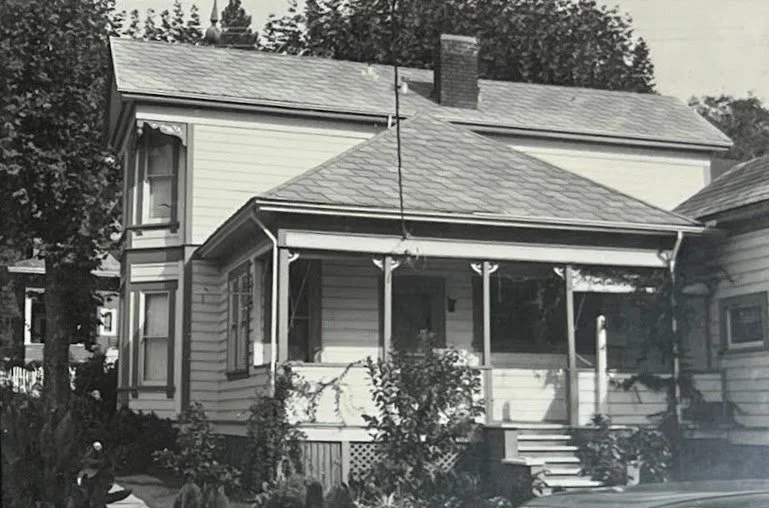
Photo courtesy the El Dorado County Historical Museum
Over the decades, the property transitioned from a family residence into a rental home, eventually becoming a celebrated bed and breakfast operated by various families. After being purchased by the current owners in 2016, the property returned to its original function as a private residence. It recently underwent a thorough restoration, which included the installation of hand painted reproduction wallpaper imported from the United Kingdom. This elegant feature was thoughtfully selected to reflect the design styles the Shafsky family may have originally displayed on their walls.