Historic Property #2: Judge George G. & Cynthia Blanchard Home
Address: 2971 Coloma Street (Historically, 48 Coloma Street)
Year Built: Circa 1873
Architect: Unknown
Builder: Unknown
Architectural Style: Front-Gabled Folk Victorian
The Blanchard House is a classic two story, wood frame Folk Victorian deeply intertwined with the early civic history of Placerville. Pioneers George Granville Blanchard and his wife Cynthia A. Haynes acquired the property in 1870, and it housed their family for more than two decades. Arriving in California in 1849, Judge Blanchard built a lucrative law practice before becoming the Superior Court Judge for El Dorado County. Reputed as the first lawyer in the county, he was the longest serving member of the local Bar after joining in 1855. A central figure in regional development, Judge Blanchard was a leading 19th century California Republican, and Blanchard Road near El Dorado still carries his name. The family also maintained a ranch in El Dorado where their original masonry house still stands.
Likely constructed around 1873, this front gabled Folk Victorian reflects the transition of Placerville from a mining camp to an established community. Resting on a simple brick foundation and measuring 30 by 30 feet, the original structure lacked modern plumbing and electricity. Instead, a small central chimney provided winter heat via stove pipes routed to individual rooms. The architectural style features a relaxed, asymmetrical facade and a full width, single story open front porch that guides visitors to a side dining room door. The exterior is clad in horizontal wood siding with tall, narrow windows designed to maximize natural light. Over time, modern utilities were seamlessly integrated and a back porch was enclosed to provide additional space.
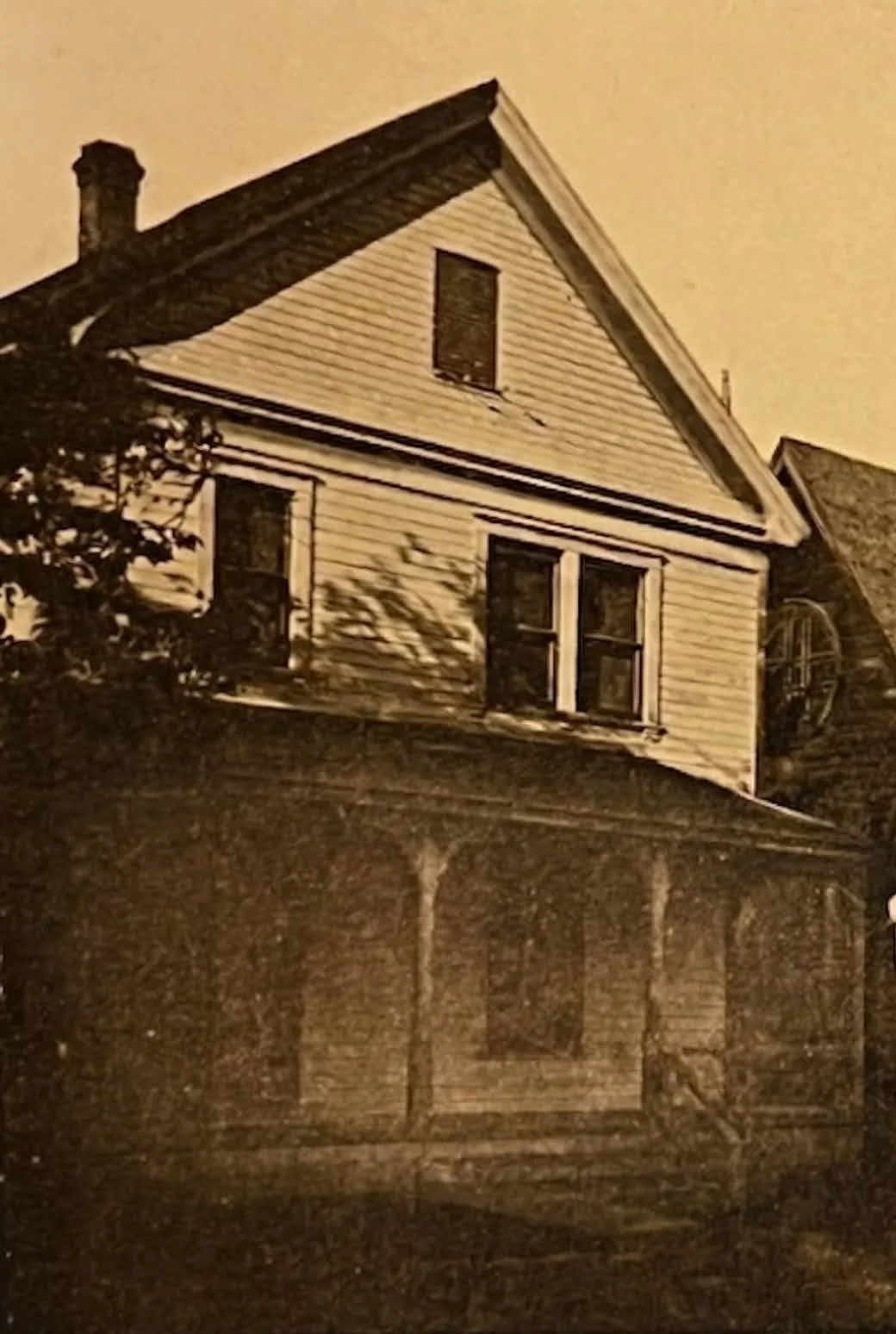
Images courtesy of the Bruce & Laurie Maclin Collection; property of Jacob Rigoli & Sean Manwaring.
Historically, a smaller home belonging to pioneer John Tinney stood on a narrow lot between the Blanchard house and the neighboring Episcopal Church. After that structure was razed around the 1920s, the land was likely divided between the church and the Blanchard property to form portions of their current driveways. Inside, the Blanchard home retains remarkable historic integrity. It exhibits the original staircase, banister, lath and plaster walls, trim, baseboards, and an understated ceiling medallion in the front parlor. The original Douglas fir subflooring has been elegantly refinished in the front hallway, dining room, and parlor. As the current owners actively restore the property, they have uncovered fragments of original wallpaper, adding an exciting layer of material culture to this Coloma Street landmark.